
Forest Guide
How does delayed tending affect future forest value?
Two stands, the same number of cubic metres — are they worth the same? Not necessarily. Tree size, quality and working costs can change the picture.
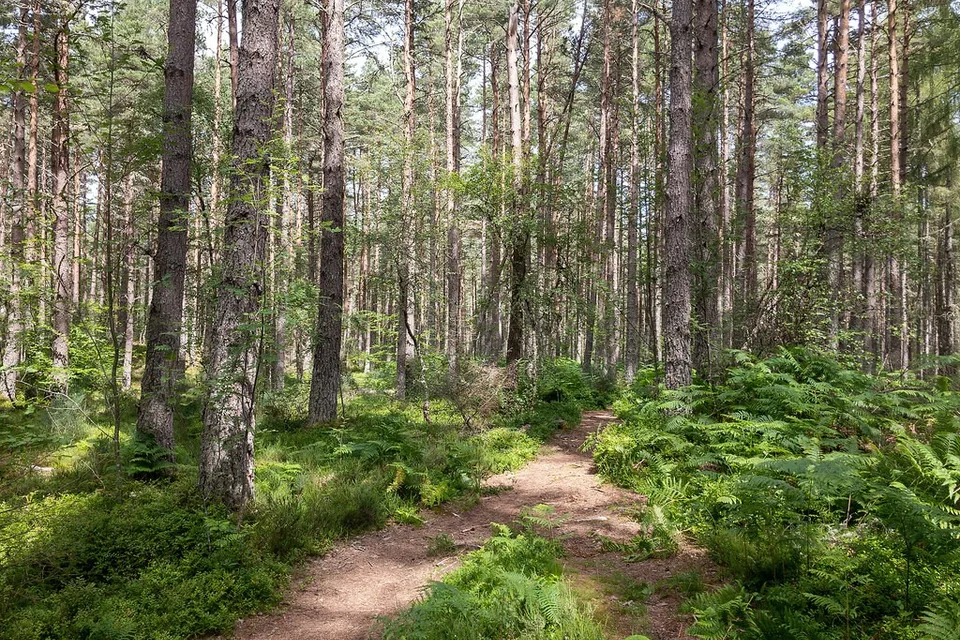
Plenty of wood — but what kind?
Cubic metres are easy to compare, but they don’t tell you everything about what can be sold. One stand may hold its volume in many small stems, another in bigger trees. Clearing gives chosen trees room, but it does not automatically grow more wood overall. Defects and buyer requirements also decide what you can sell.
Growing stock is the total volume of the trees standing now. It is not the same as all the wood grown over a rotation.
What did researchers see after delayed tending?
In the study described by Skogforsk, late clearing meant smaller crowns and slower diameter growth in the chosen trees. Some of this recovered after clearing, but the difference in diameter was still there at the end. It does not measure profit over a whole rotation or a general loss of sawlogs.
The study shows why giving trees room in time matters. The tree traits it found do not, on their own, tell you the financial return for a whole property.
Is fastest growth always the goal?
Fast diameter growth is not the only goal. In some pine stands, competition keeps branches thin, while long crowding can reduce stability and choice. Match timing and how hard you clear to the species and the timber you want.
So timing and intensity differ between stands, even on one property. Choose them for the species, site and the timber you want.
Why is there no universal loss percentage?
The sources we looked at give no single loss percentage that fits every stand. Past management, damage, prices, costs and when income comes all matter. Looking at the stand is more useful than a precise-sounding rule.
Take clearing, harvesting and other costs off the timber income, and think about when money goes out and comes in. Compare realistic options for this stand.
Your next step
Look at volume, stem sizes, damage, likely timber products and the cost of the next job together.